
2018 Feb 9
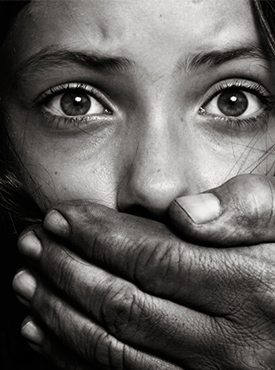
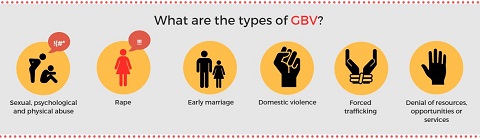
Gender Based Violence has easily become one of the most sensitive and controversial topics to date. Social media has become the perfect outlet for our rage at such despicable acts and also for reaching out and spreading awareness in global terms.
Social norms do change. Women aren’t forced to forego their ambitions and be housewives anymore. Unfortunately, some people still have trouble accepting this, amongst other issues. We’re still fighting for change. Sri Lanka happens to be a country that is stubborn and stuck in its past beliefs and education system and lax in its criminal justice. If you’re a woman reading this, you probably know what it feels like to walk down our Sri Lankan streets- harassed, followed, fearing for your own life and frankly, annoyed that some men act like they’ve never seen a woman before in their lives. Men reading this no doubt have been told to toughen up and have been harassed if their actions don’t seem to be ‘manly’ enough to the people around them. The topic of what is deemed masculine has always been a clear cut one despite strong protests to blur the lines.
We may fight for equal rights but it all surmounts to nothing if our youth isn’t educated on what is and isn’t acceptable. They are the next generation to run this county after all. Showing remarkable initiative, youth activist and high school student, Lakkitha Samarakone having read up on the campaign ’16 Days of Activism’ (a campaign based on raising awareness on gender based violence and bringing about change) decided to partake in it. Using Instagram he posed the question-
“What can we do to end gender based violence in Sri Lanka?”
Here are the most impactful responses he gathered (individuals are from 13 to 21 years of age):
Respondent 1:
“First of all we need to raise awareness in rural areas as well as in the city. Explain why it’s really bad & also strict laws need to be implemented to punish the ones responsible & also send the message to the ones that want to try”
Respondent 2:
“In order to combat something like this that’s unfortunately en-grained into society, education & awareness would be the best way starting with implementation in schools, particularly in rural areas. Also legislation can be changed, for example I really think marital rape should be illegal because otherwise it does still to some extent enable domestic violence. As we do work on trying to make things better for women as a lot of organizations I see doing, we need to not lose track of the fact that men do suffer from it too. So while it won’t go away immediately, frankly speaking I don’t think we would be alive to fully appreciate a total 180 change, change has to start somewhere right.”
Respondent 3:
“We should start by teaching the children of tomorrow that everyone is equal and each one of us regardless of gender and sexual identity has rights. We should change ourselves to change the world.”
Respondent 4:
“Through education & punishment. But more importantly, by talking about it. So people know its okay to open up about violence rather than thinking it’s something to be ashamed of.”
Respondent 5:
“Stop categorizing everything into males and females unless it’s absolutely necessary in terms of privacy and security. The moment you quit saying “engineering are for the strong boys and playing doctor are for the innocent girls” I thinks that’s when things can take a new twist in perspective in everyone’s eyes.”
Respondent 6:
“It’s best to treat everyone the same and show that we are all equal and should be treated the way we expect people to treat us. If people get that basic concept in their heads it’ll stop all gender based violence and also other problems our society faces.”
Respondent 7:
“I strongly agree that punishment is one of the key solutions to this issue. But prevention is better than cure & in our society, if it’s changing a culture, and we have to go back to the basics. A great example is Kumar Sangakkara’s implementation of the ‘Think Equal’ project, where they teach kids as young as 1 or 2 years old in their respective pre-schools that both genders are equal on every single front. This way, they will grow up with values that can prevent either gender turning against each other. It’s definitely not the fastest way to eradicate gender based violence. But it is a long term strategy that is sure to work! Children are the most resilient and flexible and we are responsible for how they are going to be crafted into the future generation. So, it’s in our hands to ensure that they grow up with openness, no taboos, and most importantly, equality between the sexes taught at very young ages.”
So what exactly do we gain from these responses? The respondents have pretty much hit the nail on the head. It gives us an invaluable insight into what the youth in Sri Lanka think about a topic such as gender based violence, and their willingness to contribute and change. It shows us how far as a country we are yet to develop.
Majority support the idea that education is a main factor in bringing an end to Gender Based Violence. Furthermore, a tougher justice system and prevention of stereotyping is needed. Implementing the Think Equal Project is a great way to emphasize equality at the youngest possible age for education. Sadly, schools are quite traditional in their way of thinking and encourage gender stereotyping (and therefore, inequality). Those who can’t afford proper schooling remain uneducated about such matters. Going to the police to file a complaint doesn’t make the streets safer for women to walk alone.

Lakkitha’s main motivation behind his research was to spread awareness about this topic. Despite being warned by a few people that this was an issue “meant for girls to handle”, he continued on regardless. He strongly believes in equal rights and the importance of sex education.
“In Asian societies, most men think that talking about gender based violence or supporting women’s rights/LGBT rights etc are not meant for them….When a man supports such rights, sometimes they label him as a girl or even bully him. So, is this what society defines as masculinity?”
This is a result of gender stereotyping at its worst. He urges activists and youth to speak out against such inequality, discrimination and violence. It is time to stop hiding behind traditionalistic ideals and more actively protest against what you know, deep down, is wrong. People who criticize you for choosing to stand up for basic human rights should be ignored. Your energy is better used first on someone who needs and accepts your help and the education to live a better life. More effort is needed to spread awareness andproper education on the subject to rural communities.
He hopes to engage with local communities to spread awareness and promote human rights in the future and it is exactly this sort of initiative we need to see from the youth of Sri Lanka. With a problem such as Gender Based Violence, the youth’s support in this cause is vital to bring about change.
For those of you in the education system- do not skirt around uncomfortable topics. Life isn’t about who does well on paper alone but those who take morals and ethics into the equation. Holding community projects to reach out to the less fortunate will help get the youth more involved.
Next, our prevailing inadequate Justice System is very much a reason to worry. If your citizens fear to walk alone on the streets, you know something is very much wrong in the country. This is something that should be rectified by a higher authority and such harassment should be recognized as a serious offence that gives our country an appalling reputation.
But what we can do, as a people, is start with the children of our generation and the next- who will carry it on to the generations after that. We must give our current fears and our hopes for a better country a voice and fight for basic human rights. It will be a long fight but the results will be well worth it in the end.