

2015 Nov 14
by Vinuri Weerawardena
I bet you’ve all noticed the pattern in chick flicks and light reads. The boring familiarity of the scene when the girl drops her books and the guy helps her. He suddenly develops an attraction towards her. The story as we all know, ends with the unlikely, “socially incompatible” couple having their happy ending.
You usually do someone a favour, thinking that the said person will feel grateful towards you and develop some type of liking towards you. This is the usual understanding not only in relation to romantic conquests but also regarding teamwork, promotions and what not. Boy have we been wrong. While this may be true in some instance, let us take a 180 and look at the flip side.
Do you actually need to drop a pile of books or anything of the sort to have your version of a chick flick? Do you need to resort to giving “tokens” to people to gain their favour? Do you need to pay your way towards that promotion? Ben Franklin has insight.
The Benjamin Franklin Effect.
Yes, Benjamin Franklin, one of the Founding Fathers of the United States. The Ben Franklin Effect not only can be applied to romantic conquests but also in the fields of leadership, teamwork, Interviews, promotions and what not.
Now research shows us that if you do someone a favour, YOU tend to like that person more as a result. This is because we do our best to justify our actions to ourselves by assuming that we did the person a favour because we have a liking towards them.
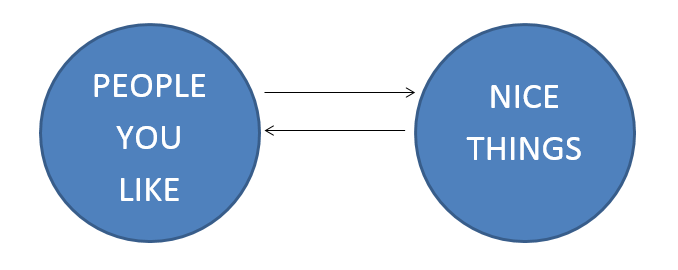
In short, we do nice things to people we like but we also tend like people because we help them out.
Ben’s Story : Rival Turns Friend.
Halfway through his autobiography, Franklin tells a story about an up-and-coming member of the Pennsylvania Assembly who had snubbed him on several occasions. Faced with the same dilemma as anyone might be in getting on with a colleague, Franklin decided to win him over and asked if he might borrow a certain scarce book from the Assemblyman’s library. The Assemblyman obliged. Franklin thanked him and from then on, they became
best friends. Franklin drew out the lesson that when you ask someone for help and they oblige, they are more willing to do you a further favour in future than if you had been the one helping them.
The Psych Mechanics : The “Excuse”
Current self-perception theory tells us that our brains behave like an outside observer, a hawk’s eye on what we do and then contriving explanations for those actions, which subsequently influence our beliefs about ourselves.
Our observing brain doesn’t like it when our actions don’t match the beliefs we have about ourselves, a situation commonly referred to as cognitive dissonance. So, whenever your behavior is in conflict with your beliefs (for example if you do a favor for someone you may not like very much or vice versa, when you do something bad to someone you are supposed to care about), this conflict immediately sets off alarm bells in your brain. The brain has a clever response – it goes about changing how you feel in order to reduce the conflict and turn off the alarms. So, if you believe that you don’t like someone, but then you help them or do something nice for them, your brain simply changes how you think about that person. You start to think “Hmm, that one’s nice, I helped him/her… I think we’ll be good friends. ”It goes both ways, you can either end up liking someone as a result of this dissolution or you might end up hating them.

How Do We Use It? Carnegie Has a Say.
As Dale Carnegie suggests in his book “How to Win Friends and Influence People”, he says that when we ask a colleague to do us a favour, we are signalling that we consider them to have something we don’t, whether more intelligence, more knowledge, more skills, or whatever. This is another way of showing admiration and respect, something the other person may not have noticed from us before. This immediately raises their opinion of us and makes them more willing to help us again both because they enjoy the admiration and have genuinely started to like us.

Now it all comes to place. Remember the girl who dropped her books and the guy who helped her? His attraction towards her now makes sense right?
Think about it, ask for a few favours, it won’t hurt but at the same time watch your feelings as you lend a hand.
Win friends and influence people, it’s not as difficult as it seems.