

2015 Sep 20
How many times have you walked around an Art gallery or spotted a painting and thought to yourself “I could’ve done that?”
The truth is, you probably could have.
The birth of modernism and modern art can be traced back to the Industrial Revolution, a period that lasted from the 18th to the 19th century, in which rapid changes in manufacturing, transportation, and technology profoundly affected the social, economic, and cultural conditions of life in Western Europe, North America, and eventually the world.
This new wave of Artwork lacked the finesse and realism as presented by the great masters like Da Vinci. This type of Art was raw and angry and reflected the hardships faces by the victims of the revolution. Here we take a longer look at what influenced some of the pioneers of Modern Art to create what they did.
Picasso and “The Blue period”
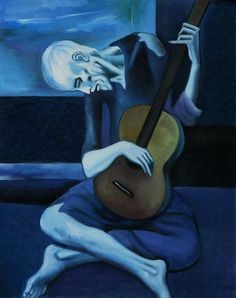 (The Old Guitarist)
The Blue Period (1901-1904) has long been considered Picasso’s first true evolution as an artist in creating his own style. Beginning with several paintings that were a requiem to the suicide of his friend. The artist’s themes grew darker; implementing a palette consisting almost exclusively of shades of blue. The monochromatic use of blue was fairly standard in symbolist painting in Western Europe, often related to representations of melancholy or hopelessness. The figures in his works were often depicted as Bohemian-type outcasts, which happened to be the life that Picasso was leading himself, poor and far away from his family. The Blue Period dramatizes the artist as an outcast from society and the theme of this era in Picasso’s career owes much to the eighteen-nineties when the idea of the artist as “l’homme maudit” happy and dissociated from ordinary life but superior to it, was created in Western Europe.
Edvard Munch
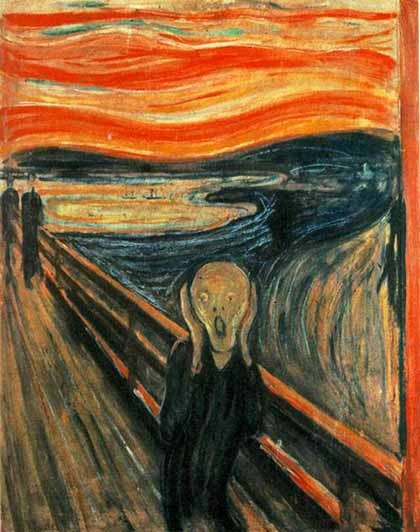
The Scream was painted in 1893 during a unique transitional period in art history; the end of the photographic Realist era, when artists wanted to show off their technical skills. He later admitted he struggled with insanity not only on a personal level during his life, but also through his family. His sister was hospitalized for insanity at the time The Scream was painted in 1893. If given a thorough enough analysis, the personal lives of most artists are not perfect portraits of happiness. What makes Edvard Munch a different kind of artist is that he shows us an honest, even ugly, glimpse of his inner troubles and feelings of anxiety through his painting The Scream, putting more importance on personal meaning than on technical skill or “beauty,” a traditional goal of art.
Piet Mondrian; Just squares?
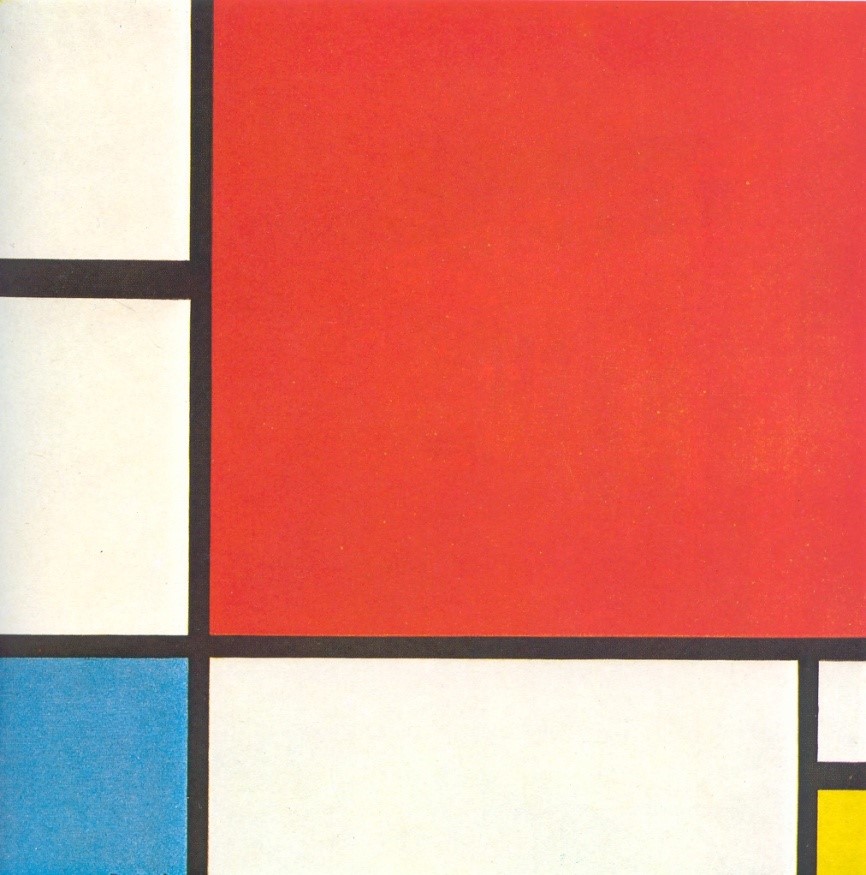 (composition in red, yellow and blue)
“The emotion of beauty is always obscured by the appearance of the object. Therefore, the object must be eliminated from the picture.”
Mondrian believed that art reflected the underlying spirituality of nature and so, simplified the subjects of his paintings down to the most basic elements in order to reveal the essence of the mystical energy in the balance of forces that governed nature and the universe. He further chose to reduce his representations of the world to their basic vertical and horizontal elements, which represented the two essential opposing forces: the positive and the negative, the dynamic and the static, the masculine and the feminine. The dynamic balance of his compositions reflect what he saw as the universal balance of these forces. His paintings evolve in a logical manner, and clearly convey the influence of various modern art movements such as Luminism, Impressionism, and most importantly, Cubism.
by Akansha Naraindas