
2020 Apr 3
As our island nation finds herself in the midst of combating an increasingly complex public health crisis, Pulse decided to capture the widespread impact of the Covid-19 outbreak on Sri Lankans of different walks of life. The pandemic has not only claimed lives and disrupted the economy, but has also severely impacted the livelihoods of most, if not, all Sri Lankans. From a small-scale entrepreneur, to a sex worker, and a journalist on the frontline, what follows are diverse stories of Sri Lankans living through the outbreak of Covid-19.
“Being thousands of miles away from home, during a period of heightened uncertainty is daunting…”
– Sheshadri, Sri Lankan post-graduate student studying abroad
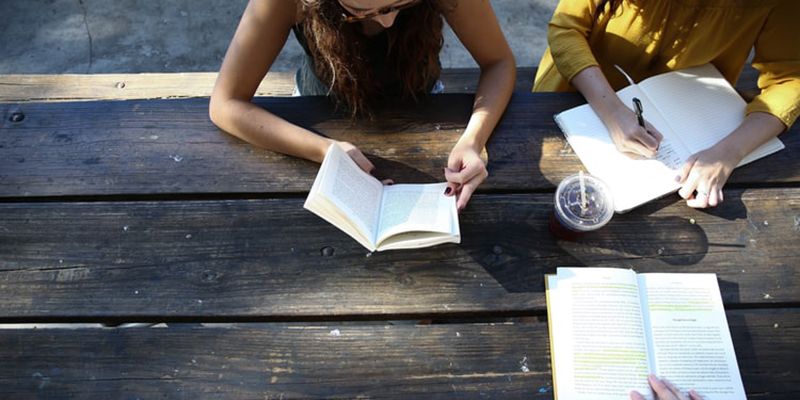
“The indefinite airport closures, lockdowns and curfews only add to the strain of being physically separated from familiar places and people,” says Sheshadri, who is currently pursuing her post-graduate studies in the UK. “Something that helps is taking time to acknowledge the situation and do what must be done to mitigate the problem. Be it taking care of yourself or being mindful of how your carelessness could affect others. Many fellow classmates entered self-imposed isolation, days in advance, knowing that we could very well be vectors of the virus.” She recommends developing a routine that is not too taxing but also one that keeps you engaged and active in addition to doing at least one thing that brings you a sense of accomplishment every day; be it painting, push-ups or even a nap. “These are difficult times,” says Sheshadri, “and it helps to strengthen our resolve by being kind to ourselves.
“They promise many things, but once they find out our profession, we are cornered and discriminated”
– Maheswari, Sex worker

“The government’s response, in the face of this outbreak, to our plight as sex workers has been disappointing. They promise many things, but once they find out our profession, we are cornered and discriminated,” says Maheswari, a 48 year old mother who works as a sex worker and advocates for their basic rights. She has been very outspoken about the issues that Sri Lanka’s sex worker community face and believes that wider coverage by the media and stronger support by community organizations can do much to pressure governments to reforms laws that criminalize sex work. During unexpected crises like this, Maheswari and others are left with no income. Despite aid and relief efforts provided by the government to vulnerable communities, sex workers are cut off from such measures due to the stigma associated with the job. “Most of us end up homeless. I was forced to handover my children to my mother because they end up being marginalized too, if they continue to stay with me.” She pointed out that “most sex workers are afraid to express their grievances to the media. The plight we face is not just a national problem, but a global one. Our profession is just like any other. The service we provide is based on consent and should not be considered a crime.” From having no access to a fair trial to being unable to admit her own children in a school, the stigma facing both males and females like Maheswari who are engaged in sex work are harrowing. “We are all entitled to dignity and basic rights as human beings. But the authorities and society at large treat us as if we are criminals. The sympathy extended to us is not going to solve our problems.”
“I’m the sole breadwinner of my family. I do not know when I can go back to my job…”
– Renuka*, Single mother of two

“The current situation has caused so much uncertainty and panic. Due to various closures and tightened restrictions on movement, I am uncertain as to when I can go back to my job.” Renuka has four dependents under her wing and remains distressed over losing her job due to increased layoffs by employers and the uncertainty as to when she can return to her workplace. “I try to remain calm and stay positive, but this situation may impact my family and other single-parent households quite severely. However, my employer has been very understanding of my situation which is a huge relief to myself and my family,” she says.
“The disabled have increasingly poor access to medicine and other necessities…”
– Kasunjith, Disability rights advocate
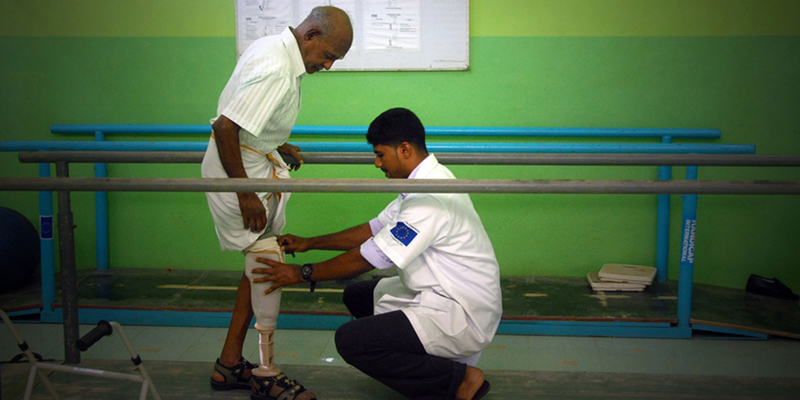
“One of the biggest challenges that disabled people in Sri Lanka face, is poor access to medicine,” says Kasunjith, an advocate of disability rights. He pointed out that the distress that disabled people face due to challenges in accessing the medicine that they depend on consequently leads to other mental health problems, such as anxiety. He added that in Sri Lanka, this challenge becomes even more serious since the state has no proper database on persons living with disability. “Unless he or she is registered under a particular hospital, they may find it incredibly hard to find medication. In the long term, the government can adopt a viable crisis mitigation strategy and a community based rehabilitation system to ensure that vulnerable communities such as that disabled people are not disproportionately affected by crises such as Covid-19.” At present, for instance, individuals who are visually impaired are marginalized by measures such as being instructed to send prescriptions by mediums such as Whatsapp. He also pointed out that “those who are bed ridden are in serious need of medication and often have bed sores due to the lack of mobility. As a result, such individuals with disabilities are twice as likely to be psychologically affected by this situation.” As Kasunjith proposes, the solution lies in a system-wide change and better coordination at local and national levels.
“Workers in the Free Trade Zone are trapped in hostels with little to no income…”
– Ashila, Worker’s Rights advocate and Founder of Stand Up Movement

The garment factory workers in the Katunayake Free Trade Zone find themselves trapped in hostels having earned minimal wages that cannot sustain them for long. They plan their expenses based on the amalgamation of a basic salary, overtime payments and production incentives. “Due to this outbreak, most workers return to their hometowns because they cannot be trapped in hostels. Due to economic hardships, they are currently undergoing lot of distress.” She conveyed that “since most of the garment factory workers are female, they find it hard to fulfil the many responsibilities imposed on them. If they cannot repay borrowed money, these women are forced to tolerate verbal and physical abuse and unsolicited sexual advances.” Ashila is also a mother of two. The uncertainty of the present situation has exacerbated her concerns over the possibility of food shortage and the safety and welbeing of her children. “My children and I become even more distressed whenever we watch the news. I try to distract them by reminiscing on happy memories from the past. But such moment soon pass and I am left with feelings of fear and uncertainty,” she says.
“Journalists like myself are subject to threats by wrongdoers…”
– Shabeer, Freelance journalist

Shabeer pointed out that many wrongdoers such as traders, who do not comply with health and safety regulations, are not only fearful of the media but they have also begun threatening journalists who report on the ground. “Moving around in public places also has its own risks. As a reporter, I have to associate with a number of different individuals, so that poses a huge health risk,” he pointed out. The spread of false information and hate speech is another challenge that has to be mitigated. He stated that “certain media outlets and journalists have unfortunately played a role in circulating such false information and this stigma often affects young journalists, like myself, who try to report accurately and responsibly.” Shabeer also shared that “despite the government’s efforts to use technology to ease the lives of the public during this situation, some communities such as those in elders’ homes, habitants of the plantation sector and communities from rural areas remain largely disadvantaged.”
If these stories teach us anything, it is to be kinder to our neighbours, check up on loved ones, comply with regulations and help out by donating to community service projects. The Covid-19 outbreak has reminded us that our shared humanity means that we will get through this together.
Disclaimer: The viewpoints expressed by the individuals mentioned in this article are solely their own and do not necessarily reflect the opinion of Pulse or the companies/organisations they are affiliated with.
*Name has been changed upon request.